
Why Kids Need Safe Jumping Platforms for Above Ground Pools
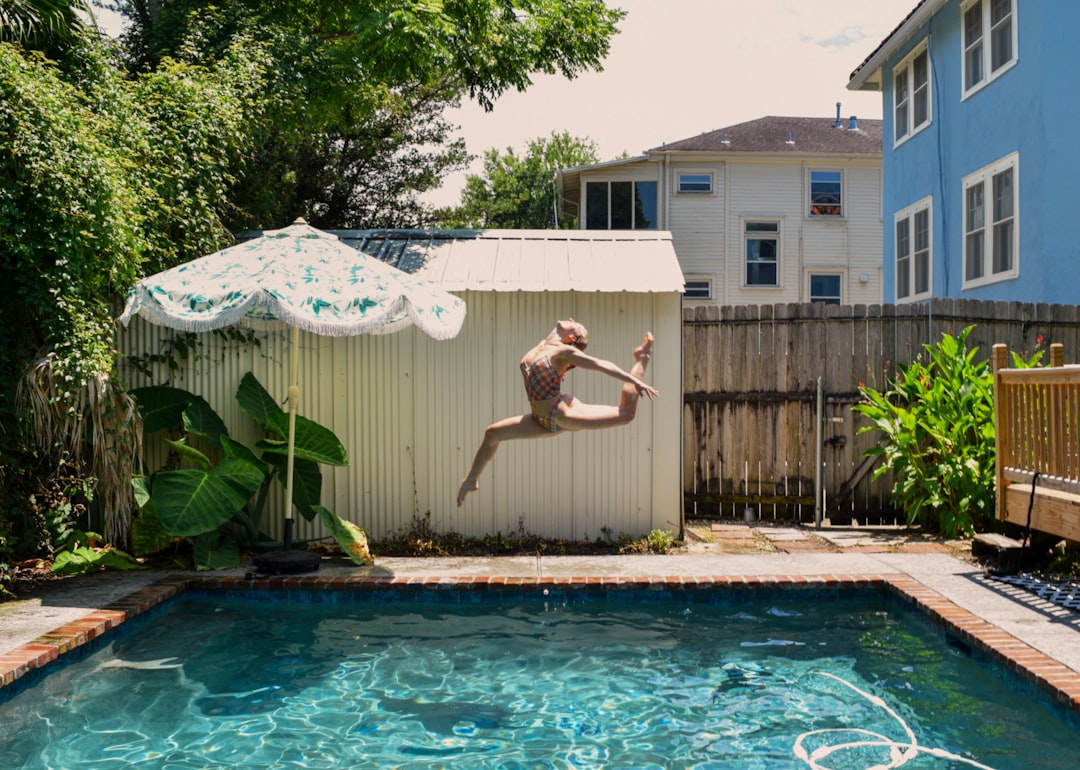
An above ground pool jumping platform provides a safe, designated area for kids to jump into the water, but it requires careful planning to prevent serious injuries. Here’s what you need to know before building or buying one:
Quick Safety Guidelines:
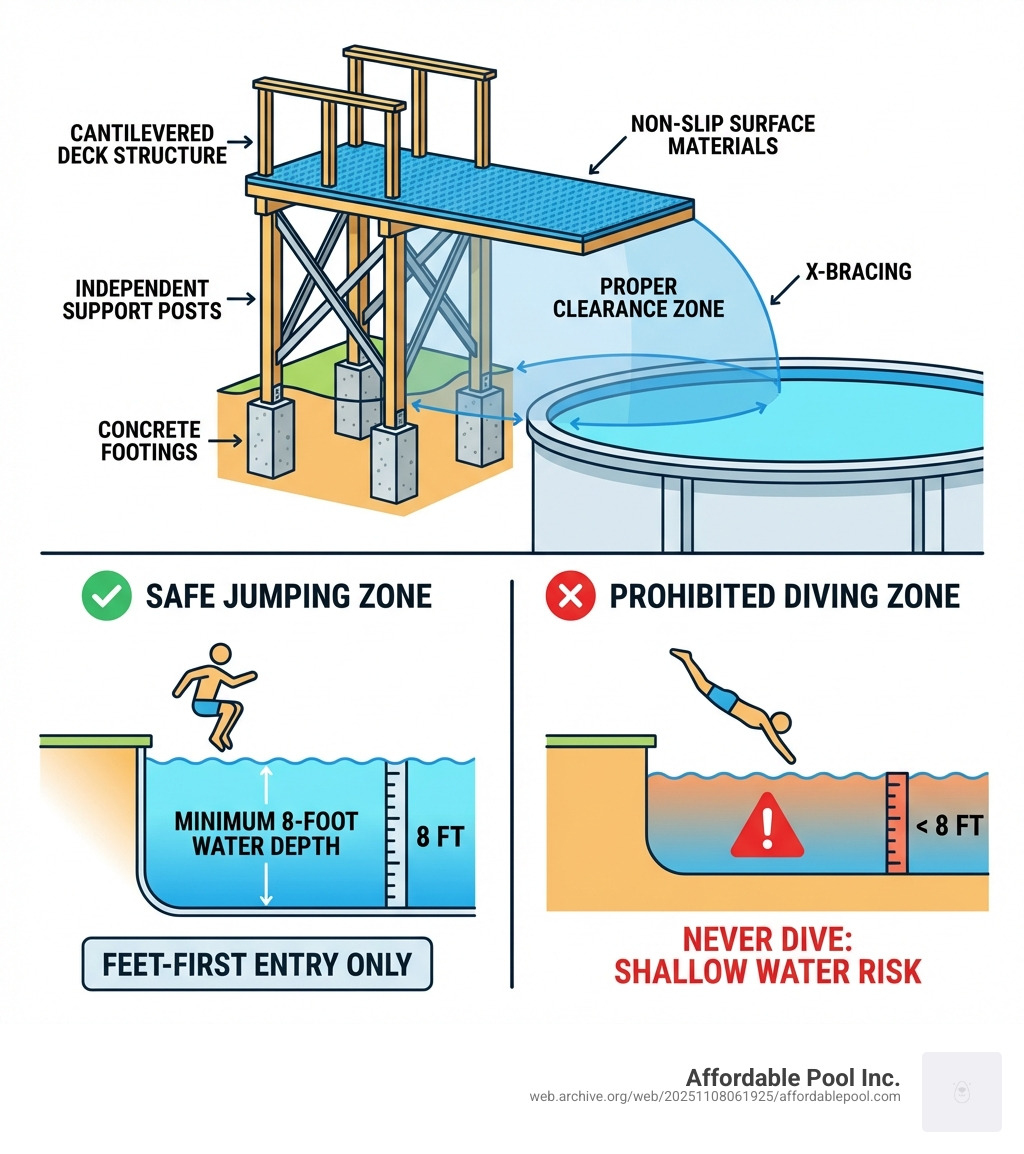
- Minimum water depth: 8 feet for any jumping platform (12 feet for commercial installations)
- Never allow diving: 7-foot depth is NOT sufficient for diving from any height
- Best options for above ground pools:
- Cantilevered deck platforms (built into pool deck structure)
- Portable inflatable water trampolines (requires 8+ ft depth, 2,200 lb anchoring)
- Pool entry steps with non-slip surfaces (shallow water only)
- Critical safety features: Non-slip surfaces, independent structural support (never attach directly to pool walls), proper anchoring systems
Key Risk: According to industry standards, jumping platforms create significant liability if not designed with appropriate water depth and structural integrity. DIY platforms must never stress the pool shell, coping, or bond beam.
The good news? You can create fun, safe jumping experiences for kids without expensive commercial equipment—if you understand the engineering basics and follow strict safety protocols.
I’m Bill Dudley, and over my 47 years working on pool projects across North America, I’ve seen both brilliant and disastrous above ground pool jumping platform designs. In this guide, I’ll show you exactly how to build or choose platforms that prioritize safety while maximizing backyard fun.
Understanding the Above Ground Pool Jumping Platform
When we talk about an above ground pool jumping platform, we aren’t talking about the springy diving boards you see at the Olympics. In residential pools, a jumping platform is typically a rigid structure designed for feet-first entry into the water.
The biggest difference between platforms for inground pools and those for above ground pools is the structural support. Inground pools have a concrete bond beam that can handle the torque of a diving board. Above ground pools, however, rely on thin steel or resin walls and a vinyl liner. These walls are designed to hold the outward pressure of water, not the downward or lateral force of a 150-pound teenager launching themselves into the air.
Rigid Platforms vs. Flexible Boards
For above ground pools, we almost always recommend rigid platforms over flexible boards. Flexible boards create “spring,” which multiplies the force exerted on the mounting point. If that mounting point is your pool’s top rail (coping), you are asking for a structural failure. According to the Safe use of Diving Boards, Platforms and Starting Blocks standards, rigid platforms are much more predictable and safer for residential recreational use.
The Importance of Structural Integrity
The pool’s wall thickness and coping strength are not sufficient to support a jumping platform. If you drill into the coping to mount a post, you risk cracking the resin or bending the steel, which can lead to a liner leak or a total wall collapse. At Affordable Pool Inc., we’ve seen DIY projects in Boston and Nashua where homeowners tried to bolt platforms to the pool frame, only to find their pool “lopsided” by the end of the summer. The platform must be completely independent of the pool structure.
Critical Safety Requirements for Jumping and Diving
Safety isn’t just a suggestion; it’s a mathematical requirement based on physics. Before you even think about design, you must measure your water depth.
The 8-Foot Rule
The absolute minimum depth for jumping from any raised platform is 8 feet. While many above ground pools are only 48 to 52 inches deep (about 4 feet), some specialized “deep end” above ground pools exist. If your pool is a standard 4-foot depth, a jumping platform is technically unsafe for anything other than a controlled “step-in.”
Statistics and Standards
- 7 Feet is Not Enough: Research shows that 7 feet is not deep enough to safely dive. Even for jumping, a 7-foot depth carries a high risk of “bottoming out” if the jumper is heavy or enters the water with high velocity.
- Commercial Standards: For those looking at high-end jump towers, the Supertramp 23 specifications and other commercial-grade jumping products require a minimum of 8 to 12 feet of water depth to prevent spinal injuries.
- NSPI Guidelines: The National Spa and Pool Institute (NSPI) standards mandate that any pool with a diving board must have a “diving envelope”—a specific shape of the pool floor that ensures the diver never hits the slopes or the bottom.
DIY Design Ideas for an Above Ground Pool Jumping Platform
If you have a pool deck, you have the perfect foundation for a jumping area. The key is to design the jumping zone as a “cantilevered” section of the deck. This means the platform hangs over the pool water without actually touching the pool wall or coping.
Essential DIY Safety Features
When designing your platform, keep these features at the top of your list:
- Non-Slip Textures: Use “Aqua-Plast” style coatings or grip tape. Wet wood or plastic is a slip hazard.
- Weight Capacity: Ensure the structure can handle at least 600 lbs of dynamic load (the force of someone jumping, not just standing).
- Smooth Edges: Sand down every corner. A child slipping off the edge shouldn’t encounter a sharp wooden corner or a jagged screw head.
Building a Cantilevered Above Ground Pool Jumping Platform
To build a safe cantilevered platform, follow these steps:
- Post Placement: Set your 4×4 or 6×6 pressure-treated posts at least 3 feet back from the pool wall.
- Concrete Footings: In New England areas like Bedford, NH or Andover, MA, you must bury your footings below the frost line (usually 36-48 inches) to prevent the platform from shifting during the winter.
- X-Bracing: Use diagonal bracing between your posts. This prevents the platform from swaying side-to-side when a kid runs toward the edge.
- Joist Hangers: Use heavy-duty galvanized joist hangers to connect your frame. Do not rely on “toenailing” screws, which can pull out under the stress of jumping.
- Decking Screws: Use stainless steel or high-quality coated screws to prevent rust from the pool chemicals.
For more inspiration on how to integrate these structures into your backyard, check out our more info about pool decks page.
Portable and Inflatable Above Ground Pool Jumping Platform Alternatives
If you don’t want to build a permanent wooden structure, there are excellent portable options.
- Inflatable Water Trampolines: Products like the Supertramp 17 are fantastic for larger above ground pools with deep centers. The Supertramp 17 details indicate it requires 8 feet of water depth.
- Swim Steps and Teaching Platforms: For shallower pools, a “teaching platform” like the IPU SSPI10 can provide a stable place for kids to stand and “hop” into the water. These are usually weighted down with sand or water and have non-slip surfaces.
- Weight and Anchoring: If you use an inflatable, you need a serious anchoring system. A 2,200 lb anchor weight (often a heavy bag of gravel or a concrete block on the pool floor) is required to keep the platform from drifting and hitting the pool walls.
How to Install and Anchor Your Platform Safely
Stability is the difference between a fun afternoon and a trip to the emergency room.
Ground Stability and Footings
Never place a jumping platform on bare soil or “deck blocks” sitting on top of the grass. The vibration from jumping will eventually cause the blocks to sink or tilt. We recommend pouring concrete footings. If you are in a coastal area like Hampton, NH or Rye, NH, the sandy soil may require even deeper footings to reach stable ground.
Protecting the Pool Liner
One of the biggest mistakes we see is homeowners allowing the platform to rub against the pool’s top rail. Over time, the vibration will wear through the vinyl liner. Always maintain a 1-2 inch gap between your platform and the pool coping. You can fill this gap with a soft pool noodle or foam buffer that is not attached to the pool, providing a “soft landing” for toes without transferring weight to the pool frame.
Hardware and Corrosion
Pool water—especially salt-water systems—is incredibly corrosive. Always use hot-dipped galvanized or 304 stainless steel hardware. Be aware of www.P65Warnings.ca.gov regarding certain chemicals in treated wood or PVC materials; always wash your hands after construction and ensure the materials are rated for contact with swimming water.
Risks, Liability, and Long-Term Maintenance
Adding an above ground pool jumping platform changes your home’s risk profile.
Insurance and Liability
In the eyes of an insurance company, a jumping platform or diving board is an “attractive nuisance.” Before you build, call your agent. Some policies in Massachusetts or New Hampshire may be voided if you install an unengineered jumping structure. To mitigate this, ensure your platform is behind a locked pool gate and that you have “No Diving” signs clearly posted.
Annual Inspections
Wood rots and bolts loosen. Every spring, we recommend a “shake test.” Stand on the platform and try to rock it. If it moves more than a fraction of an inch, your bracing or footings have failed. Check for:
- Rust: Look for “bleeding” around bolt heads.
- Splinters: Sand the wood and re-apply a non-slip sealer.
- Liner Wear: Ensure the pool wall hasn’t bowed under the platform.
Frequently Asked Questions about Pool Jumping Platforms
Is 7 feet deep enough for a jumping platform?
Technically, 7 feet is deep enough for a “cannonball” where the jumper stays tucked, but it is not safe for straight-body jumps or diving. At 7 feet, the risk of hitting the bottom is high for adults or older children. For maximum safety and to avoid liability, we recommend an 8-foot minimum.
Can I attach a platform directly to the pool wall?
No. Above ground pool walls are not load-bearing in that direction. Attaching a platform directly to the wall will cause the wall to crimp or the coping to crack. The platform must be supported by posts that go into the ground outside the pool.
How do I prevent damage to my pool liner?
The best way to protect your liner is to ensure no part of the jumping platform touches the pool. If you use an inflatable platform inside the pool, use a “liner pad” or a piece of scrap vinyl underneath the anchor points to prevent the weight from chafing the floor of the pool.
Conclusion
Building an above ground pool jumping platform is a great way to turn your backyard into the neighborhood’s favorite hangout spot. However, the line between “fun” and “hazardous” is thin. By following the 8-foot depth rule, using independent cantilevered supports, and choosing non-slip materials, you can ensure your kids stay safe while they splash.
At Affordable Pool Inc., we’ve been helping New England families in Boston, Nashua, Amherst, and beyond create the pools of their dreams for decades. Whether you need a professional safety inspection, a deck renovation, or a complete pool overhaul, we’re here to help. We offer special spring pricing and free estimates to make your pool look and feel brand new.
Ready to upgrade your backyard? Check out more info about pool decks or contact us today for a consultation!
